We, Monsters (© 2013 Numina Press), the debut novel of emerging writer Zarina Zabrisky is the literary equivalent of a Jackson Pollack painting: a multi-layered, amazing, and seductive mess. Before I begin, let me say that Zabrisky has done something I have yet to do - write a novel. However, as a fellow storyteller and a reader who likes to follow the evolutionary arc of a writer’s work, I appreciate what Zabrisky has achieved.
We, Monsters is the story of Rose, a Russian emigre who lives the American dream: successful husband, beautiful children, and house in the ‘burbs. Rose nurses aspirations to be a writer, which her husband doesn’t understand and the rest of the people in her life patently ignore. She has a rich fantasy life born out of her Russian literary heritage, her need to escape the banalities of her current existence, and the traumas of her childhood. She applies for a position as a dominatrix in a dungeon to research material for her book. Predictably, the further Rose delves into the world of BDSM, the more difficult it becomes for her to keep the parts of her life - as well as her past and present - from clashing together.
Running through each chapter of We, Monsters is a series of footnotes that explain Rose’s psychological pathology. The reader may find this intrusive. Indeed, it takes a measure of concentration not to get distracted from Zabrisky’s prose. In the heart of the story, Rose meets “Motherfucker Mike,” the most creepy (and litmus test) of the dungeon clients. MM is indirectly introduced via Rose’s study of a book called Deviants, an in-depth treatise on BDSM behavior. Rose’s first encounter with MM turns We, Monsters on its head. From this point the story instantly becomes coherent and cohesive even as Rose’s internal and external worlds fall apart.
What I like best about We, Monsters are not just the disjointed narratives that finally meld together, but the characters Zabrisky creates out of thin air. Each person in We, Monsters - Rose’s husband Luke; her children, Nick, Olga and Roxanne; her fellow mistresses Mommy, Zoe, Greta, and Susanna; even the Latina gas station attendant and the quirky clients come to life through the lens of Rose’s fractured consciousness. With a few well-chosen words and a humorous tone, Zabrisky paints a full-blown, thoroughly believable portrait:
The session was held in the Dungeon. The spy turned out to be a fragile, red-faced man in his seventies. He had the radiant blue eyes of an iconic saint and an infectious laugh. He offered us a bribe of Moet champagne and two glasses.
“It’s a bribe,” he chuckled.
I hesitated, but Susanna gulped hers down, so I followed her example and soon felt all bubbly and light-headed. As we tumbled between the ob-gyn table and the golden shower tray, Susanna transformed.
Her angelic face twisted, she scowled; her pupils widened, making her olive-green eyes almost black. Her upper lip twitched and raised and for the first time I noticed her sharp, uneven teeth, like those of a small rodent, a squirrel maybe. Her gentleness was gone; she’d turned into a wicked bloodsucking witch, and once again reminded me of Potemkin, Potemkin the Huntress, a dying mouse hanging between her bloodstained teeth.
“We are mean! Nasty! Baaad!”
Her voice was bubbling, like the champagne we were drinking. I felt adrenaline rushing through my veins and my heart pulsing.
“I will torrrturrre you in a KGB way! You will forrrget your own name!”
I caught a glimpse of my burning face in the mirror next to Susanna’s; all we’d need in order to fly was two brooms. Susanna cursed and spit and grunted. We were shouting, hitting, kicking, fighting, hurting, and it felt breathtakingly sweet. We drank more champagne, and pushed the old man around on the floor. He was laughing like a baby and shoving dollars into our thongs… - (from the chapter “A Spy Fantasy/We, Monsters)
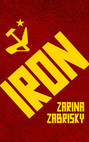
As with IRON, Zabrisky is unapologetic, as well as forthright. With We, Monsters, Zabrisky takes a great risk in alienating the reader with diametrically opposed points of view, but her gamble pays off handsomely with a novel that won’t soon be forgotten, and in some cases, may leave the reader questioning his/her own reality. I wish more writers would take this risk, as it would, in my opinion, bring literature back to where it needs to be, in the realm of Art.
(Note: We, Monsters will be released in December 2013. Check Zabrisky’s website for where/when to purchase, and author dates)
(We, Monsters, © 2013 Zarina Zabrisky, ISBN 978-0-9842600-4-1, A Vox Nova Book, published by Numina Press, 300 pages, price TBA)
© 2013 marie lecrivain