Showing posts with label spiritual poetry. Show all posts

Friday, November 3, 2023

Friday, November 3, 2023: Sister Lou Ella HIckman's "what mythical creature singing", and "a journey"

what mythical creature singing

what mythical creature is she

singing the voice of the river

yet the river itself is mythical

nothing unusual for it to sing

to roar in white water

perhaps she is also the rafter carried along

as earth’s memories are carried

along canyon walls

that too is singing

that too is mythical

the earth how unusual

being herself singing

mythical


a journey


the few memories

that survived

slept inside a house

with neat plain rooms

a small kitchen

and a small mowed lawn . . .

a screened porch

like other faces of the ordinary

spoke to the world nothing of shame . . .

my years faded forward

until counseling opened

an unexpected gift

an omen in a dream

that gutted everything glacier

and life collapsed . . .

this ancient gracefulness appeared

a spirit animal talisman

carved to fit in the palm of my hand . . .

now as i turn seventy

survival is a wildness wonder

marked with prowling paw prints

and fresh scat

tonight

as i sit in this silence waiting

for the first snow to fall

a soul-faced she-wolf

flashes across the forest darkness

in my eyes


© 2023 Sister Lou Ellen HIckman


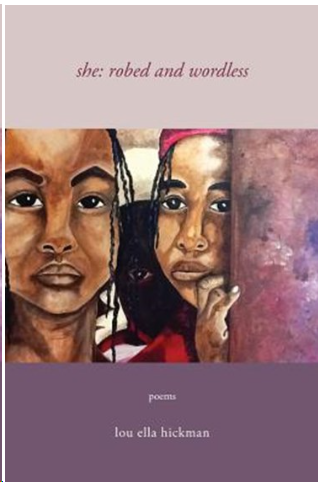
Bio: Sister Lou Ella has a master’s in theology from St. Mary’s University in San Antonio and is a former teacher and librarian. She is a certified spiritual director as well as a poet and writer.  Her poems have appeared in numerous magazines such as America, US Catholic,Commonweal, The Christian Century, Presence, Prism, and several anthologies.  She was a Pushcart nominee in 2017 and 2020. Five poems from her book, she: robed and words, set to music by James Lee III were performed on May 11, 2021 in New York City.

Friday, July 14, 2023

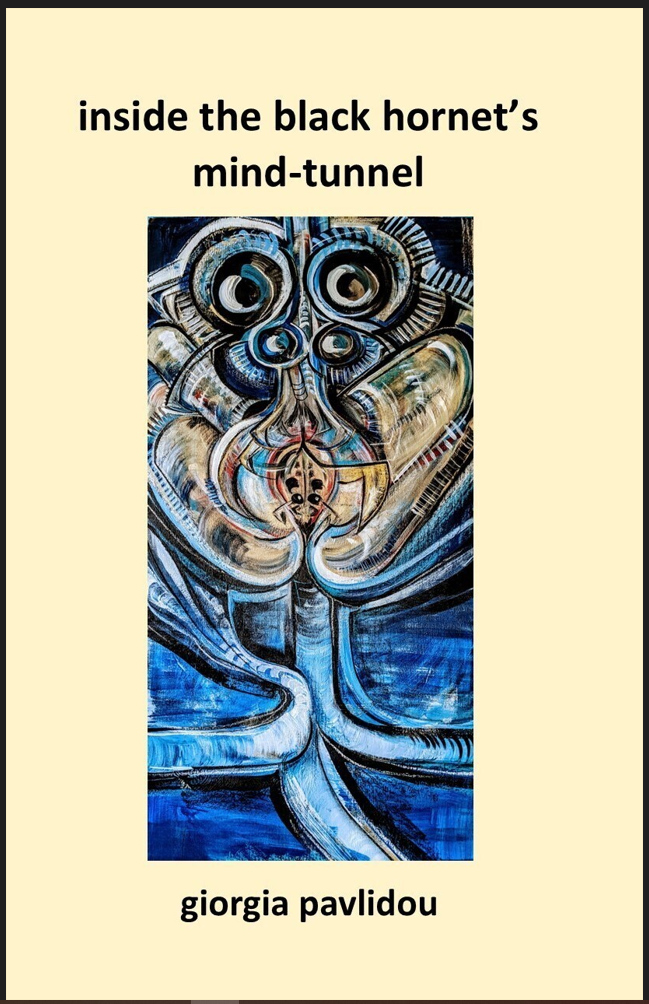
Friday, July 14, 2023: Interview with Giorgia Pavlidou, author of "inside the black hornet’s mind tunnel"


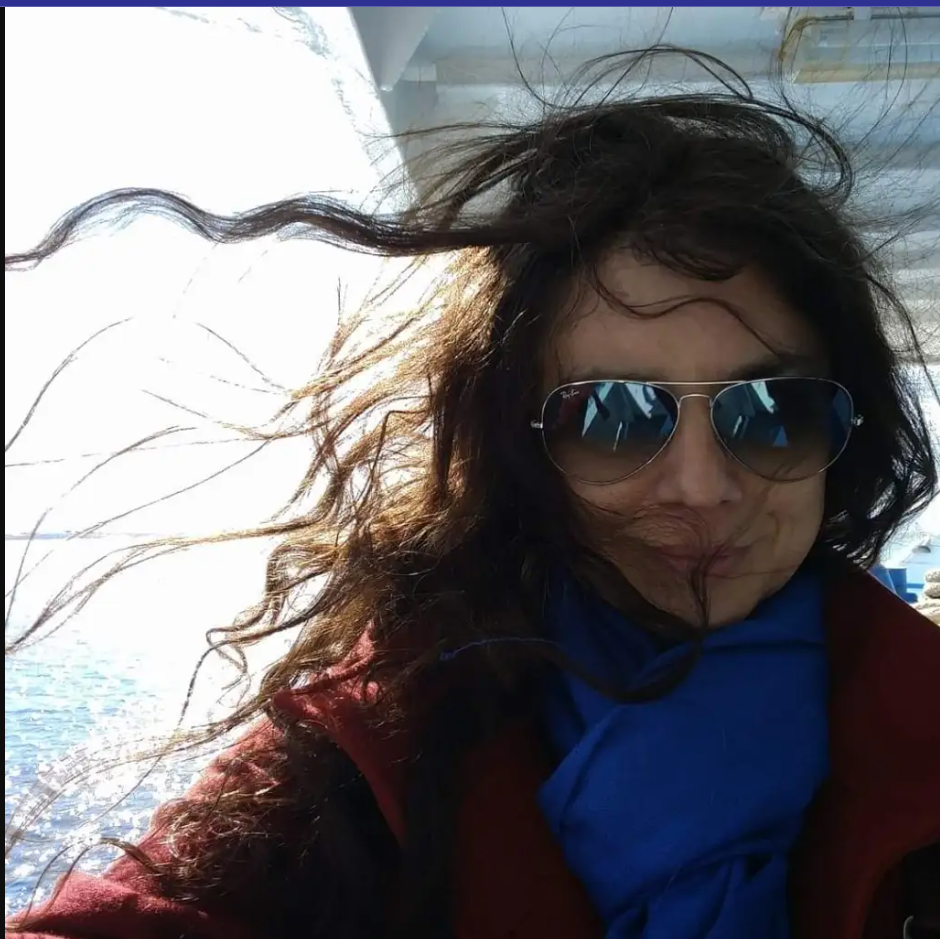
I met Giorgia Pavlidou, surrealist poet and painter, through FB, the day before she moved from Los Angeles to Greece. We’ve been published in Clockwise Cat (curated by Alison Ross), and it’s been my privilege to publish both her words and artwork in Al-Khemia Poetica


Her chapbook, inside the black hornet’s mind tunnel ( © 2021 Trainwreck Press), is the perfect fusion of surrealist poetry through a shamanic lens. Pavildou graciously agreed to an interview, and what she has to say is not only worth reading, but also  remembering.


AKP: What circumstances led to the creation of your new chapbook inside the black hornet’s mind tunnel?


GS: I either observed or hallucinated a giant black hornet exiting a little tunnel  in one of the walls of my home in the Peloponnesian Highlands, in Greece. There are solitary European hornets active in the area. I've seen many, but they aren't black. 


The image of the animal, and especially its droning stuck with me.  I kept on hearing it while traveling back to LA. The volume of its madlike current apprehended me. 

In some awkward way, it appeared protective (of me). 


Reading about solitary hornets, I discovered a mercilessly  matriarchal world. This experience and subsequent discoveries inspired me to start writing. I typed, typed and typed,  & unintentionally the piece acquired incantatory dimensions: the hornet as totem, birthing "manic wasp voltage." 


Maybe to navigate the mania of

contemporary urban living? 


The hornet's vibrations, like the shaman's drumming, opened me up to a portal leading to some other dimension. Think of it: there're hardly any wild honeybees in cities but beaucoup of wasps. Wasps thrive both in rural and urban environments. They can exist in two worlds: they're amphibians. 


I think the tunnel refers to the imagination. To survive life in an overly canned and artificial environment, I need to cultivate and ramp up the faculties  of my imagination. The black hornet's droning induces a trance that helps with that.


AKP: How would you define the phrase “living mythically”? Do you see yourself, as a poet and painter, actively involved in this process, and if so/not, why/why not?


GS: Myth probably is the default, and so-called reality is the socially sanctified narrative imposed/painted over it. I think our personal stories have  epic qualities. Even the seemingly most boring life has heroes of sorts. Boredom is a powerful antagonist. 


As a species, we're constantly redeeming ourselves. Our culture of commodification, however, has turned perfectly natural existential life-events and organic states of consciousness into deficits, and guess what, one can find a semblance of relief in psychotropic medication, quick-fix therapies, tourism, Netflix, fast food, Tinder and so on, which is, abracadabra, to the benefit of bourgeois society and the corporate world.


In this psychological black hole that LA sometimes can be, thinking of the Eurydice and Orpheus myth helped me understand my mission, the dangers, and possible rewards of my Californian meanderings.

I have encountered many Calypsos who, like Odysseus' Calypso, tried to distract me. Practicing divination can help with distinguishing the path from the detour. Poetry, perhaps, is a form of divination. It opens up the practitioner to a near-endless world of meaning and imagining. 


One feels stuck when the quotidian colonizes the mythological. In Western societies, the life-world

is emptied out of all myth and understood only in terms of use value. 


In my experience, the forest I live close to here in Greece is alive. It's a brain, a mind, a brainforest - not just wood. I feel it has incorporated me, as if I'm a family member. The trees are my family. I feel uncomfortable when I need to leave it for a while, and constantly think of it when I am away. This green mind feeds me. This is the myth I dwell in. Though I'm a clinical psychotherapist by training and profession, (though not by vocation. By vocation I'm a writer and painter), I refuse to  understand 

my life and other people's lives in clinical or psycho-medical terms. I find that one-sided and reductionist. I prefer thick descriptions. Myth is thicker than psychology.


AKP: Your title poem contains Sanskrit and Greek names/descriptive, which you very thoughtfully provided a guide for the reader to navigate. You chose words that contain multiple meanings. What was the inspiration for this, and why/why not do you think this will add to the reader’s experience?


GS: Some readers might feel irritated. Others may feel that it's presumptuous. A group of readers, however, are susceptible, I think, to the hypnosis of seeing another script and experiencing an archaic language. These words can create a wonderful exhaust and exit, especially for English speakers. The English language is so dominant, it locks you up in a one-only world-view. See these archaic foreign terms as tiny alchemical escape-hatches or windows, roads towards syncretism and multiplicity, as medicine and antidote to microwavable forms of speech disguised as language.


Poetry is a lifebuoy for the mind, used by those who understand that their nervous system is flooded with stereotypes.


Maybe even the irritation of seeing another script and feeling it's presumptuous, is enough to help you snap out of the hypnosis of the taken-for-grantedness of your own life. The script exoticizes the domestic. This alien element breaks the habitual, the mechanical, and hopefully creates some space to adopt a more

lyrical approach to living, reading and writing.


AKP: Kali Ma is not only regarded as a destructive/creative goddess, but also, as a harbinger of the time we now live in (Kali puja). What led you to associate the Kali experience with that of being inside a black hornet’s mind tunnel? 


GS: Women have traditionally been understood in western cultures as weak, so is the feminine. 

When we look at the animal world, however, we see that the female world is merciless. Perhaps it's a bit hyperbolic, but I enjoy seeing a touch of mercilessness in a woman, even if it's only imagined and  not practiced in physical reality. Kali in Sanskrit, freely translated, means the Black lady. But Kaala in Sanskrit also means time. Mahaakaal is the God of death, because basically it's Time that'll maim us all

in the end. Kaali is also protective.The solitary hornet will literally do everything and anything 

to raise her larvae. Kali protects her offspring from the excess of the extroverted forces of masculinity, of 

lineair time. The world of Black insects is radically female and its totally mercilessness. This is

probably why something in me associated being inside the Hornet's tunnel with  the protective virtues of Kali, the all-protecting but also all-devouring ancient Mother. Inside the Hornet's tunnel Kali's kids are hibernating. The hornet will sedate its prey and transport it to her young so that they feed from fresh meat. Isn't this Love with a capital L? 


AKP: You cite the poet Will Alexander as one of your influences. How has his work influenced yours?


GS: Without WA I probably wouldn't be writing poetry. WA doesn't practice linguistic acrobatics or muses over faits divers. WA's practice is applied linguistic alchemy or sonic shamanism, glossolalia of the first order, Jazz. This poetic tradition goes back to ancient times where poets were druids, oracles and other medicine people. Yet this bebopping isn't as random as it seems. It's fueled with acute observations of the mind of our times.


My meetings with WA, reading and researching his work has helped me move away from cognitive understandings of poetic practice, like when you start with a rather well defined idea and apply an accepted meter or form to develop it further. I find that boring.


I begin writing, and write, and write, and write. This is the prima materia, the magna confusa. 

Gradually images, shapes, characters, storylines, cadences, musings and music will emerge. Then I keep on kneading, kneading, kneading. I read out loud. The words reverberate physically in my throat. A rather tangible brew is massaged into existence. Without WA I'd probably still be struggling with how-to books instead of trusting my neurology to bebop on the page whatever needs to find form and expression.


AKP: As a poet and painter, how do your two mediums enhance the other? 


GS: The visual strengthens the verbal, it's like cement. The linguistic comes first,  though. The image is dangerous, it's therapeutic as well as poisonous, but it can also serve as an inspiration. Write poems as if you're painting on a canvas,  painting with words, writing with pigments, and vice versa. 


AKP: Your poem “Suicide Chez Jeff”, explores the idea of suicide as a commercial product, specifically sold through L’Amazone (I see what you did there). What are your thoughts on the legality of suicide, and the right to choose to choose to end one’s life on their own terms? 


GS: I grew up in Northwestern Europe. Euthanasia is a total non-issue there. I find it strange that it doesn't exist in California or elsewhere. Turning it into a commercial product would take commodification to another level. I tried exploring that cynical reality in Suicide Chez Jeff. Perhaps in some future point you can apply for euthanasia online. What would that look like? When will that become a reality? 


AKP: What’s your next project, and when will it be released?


GS: I just finished two new manuscripts: "Female Body Retold," and "Appetite for Abjection." I have submitted these to a few small scale avant-garde presses. It'd mean the world to me if you'd keep your fingers crossed with me.


© 2023 marie c lecrivain


Friday, November 22, 2019

Mariano Zaro's Decoding Sparrows


There’s an infinite number of reasons to write, as well as read, quality poetry. The most important, in my opinion, and based on my experience, are the following: love of language, development of one’s spirituality/empathy, and to document the deeper moments of human existence. To be able to harness all three in a poem is a challenge, though every poet I’ve ever read strives to do their best. Very few poets consistently succeed, and one of those is Mariano Zaro. His work, over the years, has been a steady journey toward this poetic trifecta, and his newest collection, Decoding Sparrows (© 2019 What Books Press), is proof of his mastery.
     Decoding Sparrows, divided into three parts, contains personal accounts of people who populate Zaro’s universe; family members from his youth in Spain (“Decoding Sparrows”, “Old Petra”), friends and lovers (“Convenience Store”, “The Crown of Youth” ), as well as strangers in passing who’ve left their mark on his poetic consciousness (“Nun Eating a Small Apple”, “Street Vendor”). 
    Zaro’s minimalist style and dialogue launch the reader right into the heart of each poem, where they become one with the person who’s interacting with Zaro. It’s a powerful and unique synthesis of reader, poet, and subject, most notably in the poem, “They Say Fire is the Tongue of God”, where Zaro takes a Benedictine Anglican monk, Brother George, to the remains of his monastery, which burned down to the ground during the Tea Fire (2008), in Santa Barbara, California:

Past fire extinguished inside cold volcanic rocks.
Future fire in lightning, war, and funeral pyres.
Present fire in this combustion that we are.

I drive Brother George to the monastery.
To the place the monastery used to be.
This is his first time back here
after the fire destroyed it all.

I bring my dog Cooper with us, because he loves
Brother George, because he may help
sort out the path of grief.

It’s hard to believe, Brother George says
when we arrive, standing at the edge of the road.
   The tower was there, he says, pointing
     at the air on a clear Saturday morning.

Workers have removed the rubble.
Brother George walks into the dark, flat ground.
The library was there, he says. The refractory,
the pantry, our rooms, the main chapel.

The bell is still standing, lifted on a tall, uneven tripod.
A bell big as a horse’s head, all bronze but humble.
Almost embarrassed by its survival.

Brother George rings the bell, three times,
and the sound, violent and soft, rolls down
the mountains that open like a throat.

Cooper gets agitated, starts barking at the sky,
eyes furious, leash tense. I kneel down and
cover his ears. It’s okay, it’s okay, I say.

Brother George leans his forehead against
the bell, suffocates the last breath of sound,
and all is quiet again, inescapable.

© 2019 Mariano Zaro

     Poetry is a gateway to empathy, an ever diminishing commodity in this present age. Zaro’s Decoding Sparrows will help keep readers in touch with their humanity, as well as their humility, the two best qualities that make us, as a species, worthy of survival.

Decoding Sparrows, Mariano Zaro, © 2019 What Books Press (www.whatbookspress.com), ISBN 987-1-5323-4145-8, 111 pages, $17.95

© 2019 marie c lecrivain

Sunday, September 27, 2015

Touchstone Poets Series: Heather Schubert on Aleister Crowley


“The reception of a poem, being a ritual Magical initiation, suffers no interruption. The music must be perfect; hard, maybe, to appreciate, as is Beethoven, but unmistakably sublime when fully understood. “ The Confessions of Aleister Crowley


     One of the reasons I love poetry is because it involves aspects of language that appeal directly to, and communicate by, sound and sight. Poetry relies on the sound of the spoken language and on figurative language. It has the ability to transport the reader into an entirely different reality in an extremely short time. When I read many of Aleister Crowley’s poems I find myself submerged into decadent tales full of rich scents, sounds and tastes so descriptive they brutally assault my senses. "The Eyes of The Pharaoh" takes me deep into an ancient pyramid. I go from standing in a tomb, to a temple and back again. I can smell the acrid scent of death wafting through the musty halls and taste dry dust in my mouth. Crowley’s ability to inspire the reader’s imagination is notable. When it comes to being disgustingly descriptive in some of his more vile pieces he certainly possesses a unique gift.
Whatever the substance of the remarks and the ultimate message, poetry is characterized by linguistic elements that go beyond standard sentence structure. 
     From a literary standpoint Crowley was an unoriginal poet in the sense that he mimicked other great writers primarily in form. There is a great deal more value in Crowley’s poetry than what we can gain from it purely on a literary or analytical basis. He wrote poetry from a young age until close to his death, pouring himself into this artistic form of expression his entire life. When you consider the magical and spiritual experiences and transformations he underwent during his lifetime; the secrets he learned, guarded and taught; the prophetic visions he had; and the sheer amount of knowledge he possessed, it would be naïve to think that none of that came through in his poetry.
     Spiritual art of this type has the power to transmit realizations directly to us, as if we share in the artist’s journey. Some spiritual experiences aren’t easily translated into words and poetry provided Crowley with the perfect artistic medium. Some of his poems attempt to describe intense moments of union in which division falls away and the unity of reality and individual awareness is experienced as one fluid stream. Others describe ecstatic experiences of a different kind, while some depict the subtleties of our inner life and of the spiritual journey itself. The language of other genres of writing is expressed as being "poetic" when it draws heavily on either indirect expression of ideas through imagery, symbolism, or figurative language or when it draws heavily on the sound of words. Much of his other writings are poetical in nature because they draw on these expressions of ideas and because he was truly a poet at heart. If he hadn’t been, I do not think that his ideas and philosophies would have survived as long as they have. The work of Aleister Crowley speaks to my soul and has inspired me to discover and describe my individual spirituality through my own poetry and other writings.
     Aleister Crowley is best known for being an occultist and the scribe of the Book of the Law, which introduced Thelema to the world. He was a prolific writer and I find that many people are not aware of the intense volume of poetry he published during his lifetime. The fact is that he published it on a fairly consistent basis starting in 1898 and ending in December of 1946, shortly before his death. He published more poetry than anything else. When you take on Crowley’s poetry you must cast aside your preconceived notions of the man himself and of his literary handicaps. You have to be impartially open to it. I encourage you to approach it with new eyes and believe me, you will see new things.


© 2015 Heather Schubert


Bio: Heather Schubert’s education and involvement in Thelema and the philosophies of Aleister Crowley has been rich, broad, deep and exciting. Her burning passion currently lies in further propagating the Law of Thelema and in expanding the areas in which these philosophies apply to all aspects of modern day life. She joined Ordo Templi Orientis, or O.T.O., in 1994 and has been an ordained Priestess in Ecclesia Gnostica Catholica since 1999. She teaches classes on the poetry of Aleister Crowley, as well as on his other writings and rituals. Heather has studied classic literature, poetry, philosophy, psychology, religion, anthropology and early childhood education. Her interests and talents lie specifically in applying the Waldorf and Montessori teachings of the therapeutic aspects of creative play across many scientific disciplines and philosophies including research in positive child psychology, sociology, philosophy and other sciences as they relate to what cultivates thriving childhood experiences. She was the editor of the Crowned and Conquering Child for three years. Her poems have been published in a local journal called The Blue Fur as well as in a variety of coffee table books, newsletters and magazines for years. She is currently working on a collaboration of collected poems by Aleister Crowley, a book on thelemic parenting styles and another book that delves into the spiritual aspects of orgasmic birth from a thelemic viewpoint.